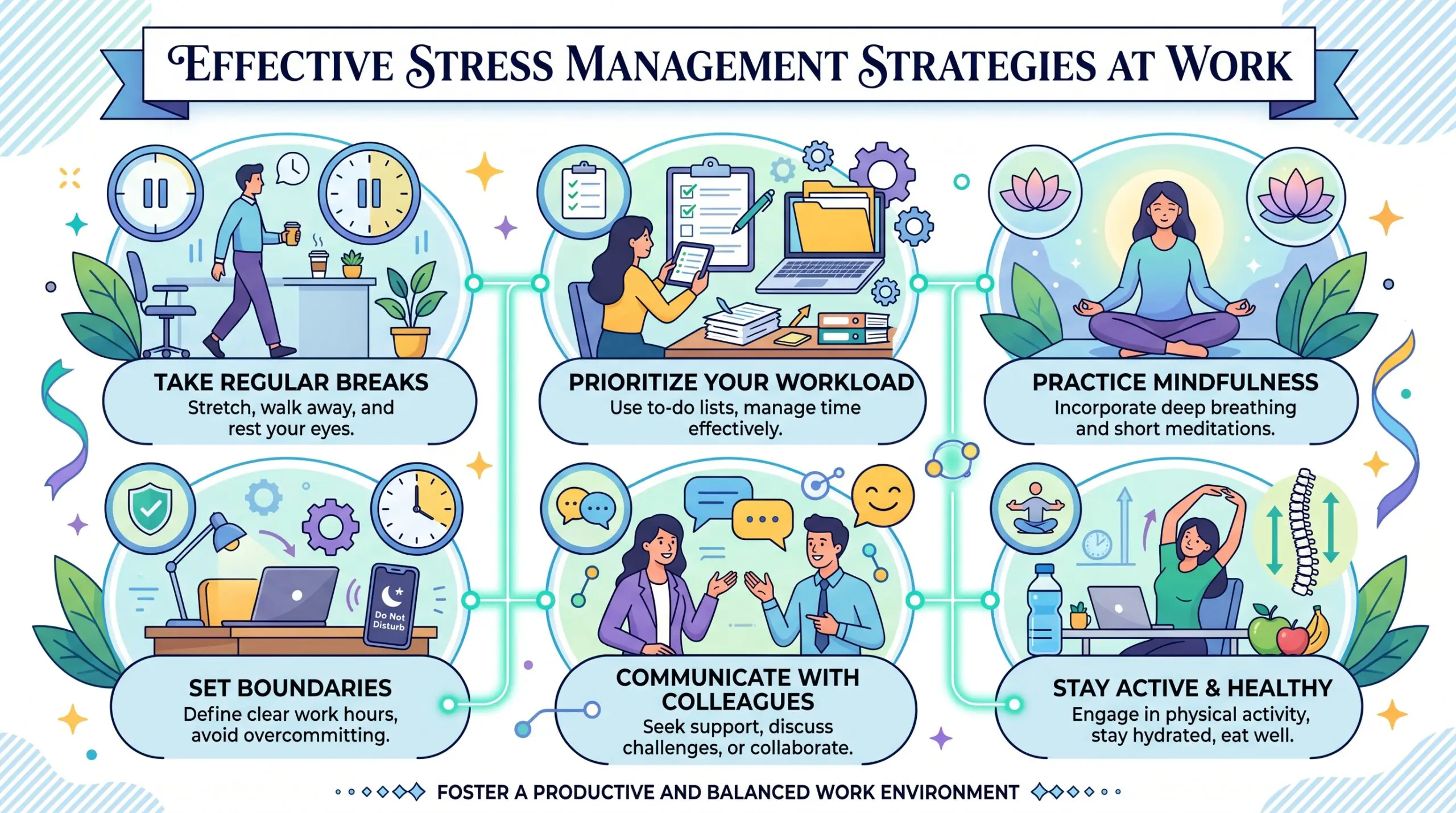
Stress Management Strategies at Work: Complete Guide for 2025
Stress management strategies at work are more essential than ever in today’s high-pressure professional world. Employees constantly juggle heavy workloads, tight deadlines, and workplace demands that leave them mentally and physically drained. Understanding the right tools and habits to stay balanced is no longer optional. By applying proven stress management strategies at work, you can protect your health, boost your productivity, and build a more fulfilling career.

Why Stress Management Strategies at Work Matter
Unmanaged workplace stress harms both employees and organizations. It leads to reduced productivity, higher absenteeism, burnout, and increased employee turnover. According to the American Psychological Association, nearly 3 in 5 employees report negative impacts of work-related stress. Addressing stress early helps employees stay focused, make better decisions, and maintain long-term career growth.
Common Causes of Stress at Work
Identifying what triggers stress is the first step toward managing it. Common workplace stressors include:
- Excessive workload and unrealistic deadlines
- Lack of support from colleagues or managers
- Poor work-life balance
- Job insecurity and career uncertainty
- Lack of control over tasks and decisions
Understanding these triggers helps employees choose the right coping strategies for their specific situation.
How Workplace Stress Affects Your Health
Chronic workplace stress takes a serious toll on the body and mind. Physically, it causes headaches, sleep disruption, digestive problems, and a weakened immune system. Mentally, it leads to anxiety, depression, difficulty concentrating, and emotional exhaustion. Healthcare costs are nearly 50% higher for workers reporting high stress levels, making early intervention critical.
Effective Stress Management Techniques at Work
There are several proven approaches to help employees stay calm and focused at work.
Identify Your Stress Triggers
The first step is recognizing what causes your stress. Whether it is workload pressure, difficult interactions, or lack of control, identifying the root cause makes it easier to address and reduce its impact.
Practice Smart Time Management
Break large tasks into smaller steps, prioritize daily goals, and use planners or digital tools to stay organized. Research links effective time management to higher job satisfaction and lower burnout rates.
Take Regular Short Breaks
Working without breaks increases mental fatigue and reduces efficiency. Even a five-minute walk, stretching session, or deep breathing exercise can significantly reset your focus and lower stress levels.
Create a Comfortable Work Environment
A clean, organized, and ergonomic workspace promotes calm and concentration. Adding natural light or indoor plants can brighten your mood and support sustained focus throughout the day.
Practice Mindfulness and Deep Breathing
Mindfulness anchors you in the present moment and reduces anxiety. Simple techniques like focused breathing or a 10-minute guided meditation help lower cortisol levels and improve emotional regulation.
Communicate Openly with Your Team
Clear communication reduces misunderstandings and workload pressure. If you feel overwhelmed, speak honestly with your manager or teammates. Asking for support is a strength, not a weakness.
Maintain a Healthy Work-Life Balance
Set firm boundaries between work and personal life. Log off on time, dedicate time to hobbies and family, and avoid bringing work stress into your personal space. Consistent recovery time is essential for long-term well-being.
Daily Stress Relief Routine for Employees
A structured daily routine helps maintain consistent well-being at work:
- Begin mornings with light stretching or a short meditation
- Use the Top 3 method — identify your three most important tasks each day
- Take short breaks every 90 minutes to recharge
- Limit screen time and notifications after work hours
- Practice gratitude journaling before bed to end the day positively
When to Seek Professional Help for Work Stress
If stress is consistently affecting your sleep, relationships, job performance, or physical health for more than two to three weeks, it is time to consult a licensed mental health professional or use your company’s Employee Assistance Program (EAP). Seeking help early prevents long-term burnout and supports faster recovery.
Conclusion
Applying the right techniques daily — from mindfulness and time management to open communication and healthy boundaries — empowers employees to reduce pressure, stay focused, and enjoy a healthier work-life balance. Consistent practice leads to a more resilient, productive, and happier workplace for everyone.
Frequently Asked Questions (FAQs)
What are stress management strategies at work?
They are practical techniques like time management, mindfulness, regular breaks, and open communication that help employees reduce and cope with workplace stress effectively.
What causes the most stress at work?
Excessive workload, unrealistic deadlines, lack of support, job insecurity, and poor work-life balance are the most common workplace stress triggers.
How does workplace stress affect physical health?
It causes headaches, poor sleep, digestive issues, weakened immunity, and increases the risk of heart disease and chronic illness.
How can I manage stress at work quickly?
Take a five-minute walk, practice deep breathing, or do a short mindfulness exercise. These simple techniques provide immediate stress relief.
How important is work-life balance for stress management?
Very important. Setting clear boundaries between work and personal life allows stress hormones to normalize and prevents long-term burnout.
When should I seek professional help for work stress?
When stress consistently affects your sleep, relationships, or performance for more than two to three weeks, consult a therapist or use your company’s EAP program.
Can mindfulness really reduce workplace stress?
Yes. Studies show that regular mindfulness practice lowers cortisol levels, improves emotional regulation, and builds mental resilience over time.
What is the most effective long-term strategy for workplace stress?
Combining time management, regular exercise, mindfulness, open communication, and healthy work-life boundaries creates the strongest and most sustainable stress management system.