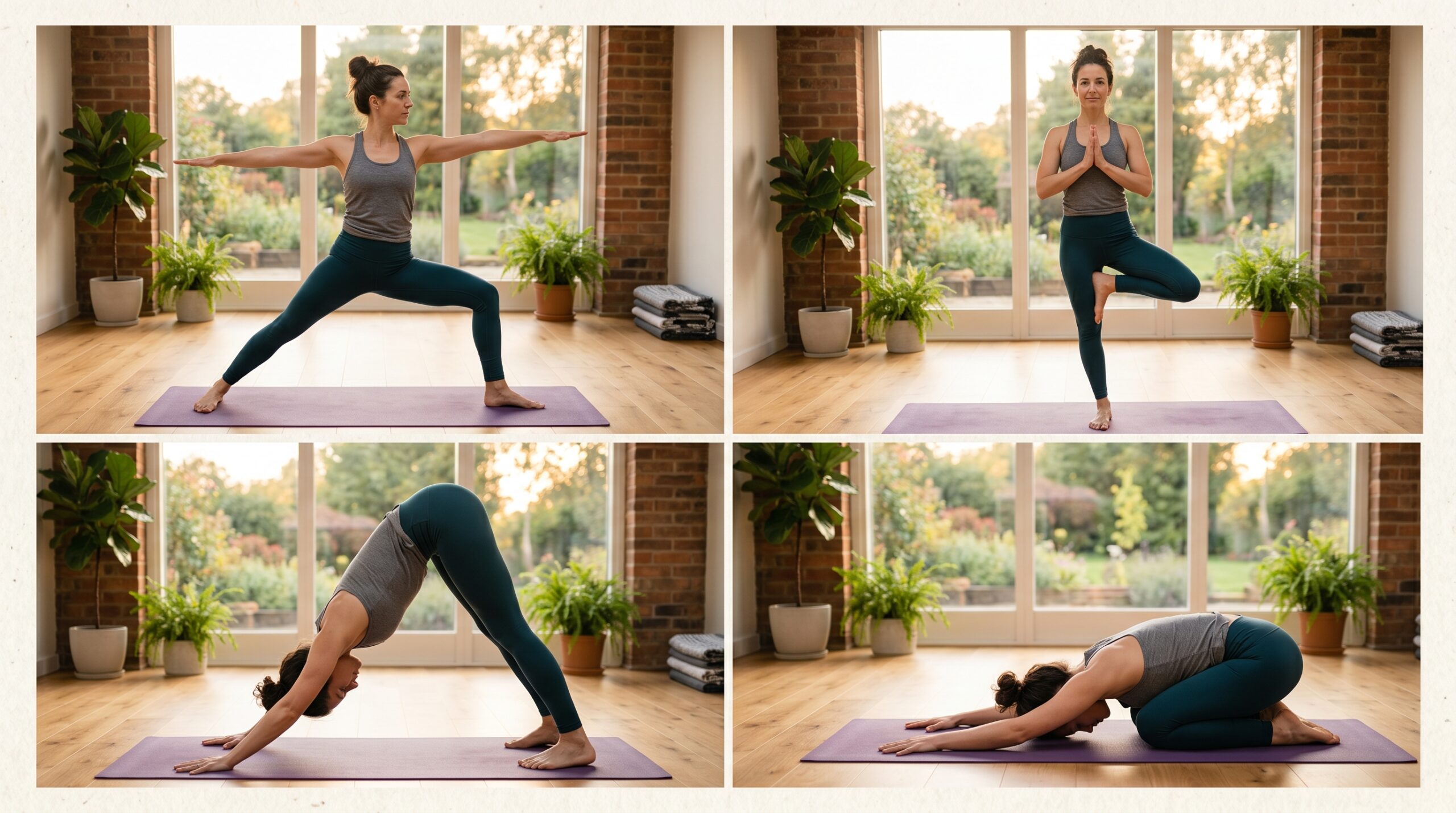
Yoga Poses: Complete Guide to Flexibility, Strength & Peace
Yoga poses they have kind of proven themselves for ages, as one of the most practical tools for physical progress, mental clarity, and emotional steadiness. People have practiced it for centuries, and the movements breath, plus this mindful noticing stuff , shapes the body toward a kind of agreement with the mind. Whether you’re new or you’ve been doing it a while, learning the right postures can genuinely shift your everyday life. If you stick to just a few minutes each day, you’ll often feel changes not only in your body, but also in your thoughts, and in your general well-being too.
So What Are Yoga Poses, and why do they matter?
Yoga poses, also called asanas, are body postures that blend deliberate motion, breath control, and attentive awareness. These positions are made to create a better balance between the body and mind, while also supporting overall health. Unlike a lot of exercise that only goes after raw strength , yoga links mental focus with the physical work. That mix helps soften stress, while also building flexibility and steadiness.
With yoga poses done regularly, you can notice muscle tone improving, plus posture, and better coordination in a more quiet way. It also encourages inner calm , which makes it a fitting practice for many people, across ages, and fitness levels.
Benefits of This Practice for Overall Health
A steady yoga practice brings a bundle of physical and mental health perks. Over time, the body becomes more limber, and stronger, while the mind feels calmer, and more centered. Yoga tends to be useful because it stays low-impact, and it’s generally easier on the joints, so even beginners , or people returning from injuries, can often find a suitable approach.
Some of the main benefits look like this:
- Improved flexibility and muscle tone
- Less stress and anxiety
- Stronger blood circulation and better heart support
- Clearer thinking and improved concentration
- Help with chronic pain, and body stiffness too
Also, yoga supports healthier breathing habits, and it can improve sleep quality, so you wake up feeling more refreshed and more energized during the day.
Basic Yoga Poses for Beginners
If you’re starting out, going with easier poses is the usual best path. It builds confidence, and it helps prevent getting hurt. Beginner-friendly postures usually focus on alignment, balance, and gentle stretching, not some extreme efforts.
Tadasana, also called Mountain Pose : helps with posture , and body awareness in a more grounded way
Adho Mukha Svanasana, Downward Dog : stretches the spine , hamstrings and shoulders, and you sort of feel everything line up
Balasana, Child’s Pose : encourages rest and eases stress , for real, like a quiet reset
Vrikshasana, Tree Pose : boosts balance and helps with focus , plus that steady stability thing
So yeah these grounded poses make a solid start point, then later you can move into more advanced yoga variations , without feeling totally lost or out of place.
Postures for Strength and Flexibility
When you level up, adding more active poses is a great way to build strength, and increase flexibility. Movements like Warrior Pose, Cobra Pose, and Plank Pose tend to work big muscle areas, including the core, arms, and legs.
These postures not only grow physical strength, they also raise endurance and body control. If you keep practicing, you might notice less muscle tightness, and more flexibility through the spine. That usually makes daily tasks easier, and can lower the risk of injuries too.
Asanas for Stress Relief and Mental Calm
One of the strongest things about yoga is how it helps with stress, and calms the mind. Certain poses are made to relax the nervous system, and to help release tension that often gets stored in the body.
Examples include:
- Seated Forward Bend
- Legs Up the Wall Pose
- Corpse Pose (Savasana)
If you pair them with deep breathing routines like pranayama, these postures can help dial down anxiety, and also lead to a kind of quieter relaxation. When you do them regularly it can support emotional steadiness, plus mental clarity that feels more grounded.
How to Practice Safely: Tips for Beginners
If you want the best outcomes, it helps to practice safely, and with real awareness, not rushing:
- Practice on an empty stomach or with a small light meal beforehand
- Start with a gentle warm up every time
- Keep your breath slow , and steady
- Don’t push your body beyond its comfortable edge
- Try props like blocks or straps, if they’re helpful
- Stay consistent— even 3 sessions per week can work
Noticing what your body is doing is crucial. At first, progress may seem kind of slow or underwhelming, but the repeat habit usually pays you back with longer-term benefits.
Conclusion
Adding yoga poses into your regular routine can create lasting improvements for physical health, and mental steadiness. With patience, devotion, and a mindful way of showing up, yoga stops being only exercise, it becomes a lifestyle kind of practice. Over time you’re likely to feel more balance, more strength, better flexibility, and more inner peace, which can help you live a healthier and more satisfying life.