7 Best Meal Plans for Weight Loss That Actually Work in 2026
You have tried eating less. You have tried eating clean. But the scale still does not move the way you want it to.
Here is the real problem — random food choices without a plan never lead to lasting results. The best meal plans for weight loss are not about starving yourself. They are about eating the right foods in the right amounts so your body burns fat without feeling miserable every day.
This guide covers the most effective meal planning strategies, practical daily menus, food swaps that make a real difference, and everything you need to start seeing results this week.
Why Meal Planning Is the Missing Piece for Weight Loss
Most people fail at weight loss not because of willpower — but because they have no structure. When hunger hits at 3pm and there is nothing ready, you grab whatever is nearby. That one moment undoes a full day of good choices.
The best meal plans for weight loss solve that problem before it starts. You decide what you eat before you are hungry, tired, or rushed. That single shift changes everything.
Research consistently shows that people who plan meals in advance consume fewer calories, make better food choices, and lose more weight than those who eat based on whatever is available. Meal planning is not a diet trick — it is a proven system.
Core Nutrients Every Weight Loss Meal Plan Must Include
Before building any plan, you need to understand what your body actually needs. The best meal plans for weight loss are built around four core pillars — not calorie restriction alone.
Protein — Your Most Important Ally
Protein keeps you full longer than any other macronutrient. It also protects lean muscle during a calorie deficit. Every effective weight loss meal plan centers around adequate protein intake — roughly 1.6 to 2.2 grams per kilogram of body weight daily.
Best sources: chicken breast, eggs, Greek yogurt, lentils, tofu, cottage cheese, and tuna.
Fiber — The Hunger Controller
Fiber slows digestion and keeps blood sugar stable. That means fewer cravings and longer time between meals. Vegetables, fruits, legumes, oats, and whole grains are your best fiber sources. Most adults need 25 to 35 grams daily — most people get half that.
Healthy Fats — Not Your Enemy
Healthy fats from avocados, nuts, seeds, and olive oil support hormone balance and keep you satisfied after meals. Cutting all fat is one of the biggest mistakes people make when following weight loss meal plans. Include moderate amounts at every meal.
Complex Carbohydrates — Slow Energy, Better Results
Not all carbohydrates work the same. Complex carbs like oats, quinoa, sweet potatoes, and brown rice release energy slowly. They prevent the blood sugar spikes that lead to energy crashes and overeating. The best meal plans for weight loss include complex carbs — they do not eliminate them.
7 Best Meal Plans for Weight Loss — Detailed Breakdown
1. The High-Protein Low-Calorie Plan
This is the most effective structure for beginners. You eat three main meals and one snack daily. Every meal contains a lean protein source, a non-starchy vegetable, and a small portion of complex carbs. Calorie target sits between 1,400 and 1,600 per day depending on your body weight.
This plan works because protein reduces hunger hormones. Studies show people on high-protein diets eat up to 400 fewer calories per day without trying to restrict.
2. The Mediterranean Diet Plan
The Mediterranean approach is one of the best meal plans for weight loss and long-term health combined. It focuses on olive oil, fish, vegetables, legumes, nuts, and whole grains. Red meat appears only occasionally. Processed food barely exists.
People following the Mediterranean diet lose weight steadily and keep it off longer than most other approaches. It also reduces cardiovascular risk — a bonus most weight loss diets do not offer.
3. The Intermittent Fasting Meal Plan
Intermittent fasting is not about what you eat — it is about when. The most popular structure is 16:8 — you fast for 16 hours and eat within an 8-hour window. Most people skip breakfast and eat between 12pm and 8pm.
When combined with the best meal plans for weight loss, intermittent fasting reduces total calorie intake naturally without counting every gram. It also improves insulin sensitivity, which directly supports fat burning.
4. The Low-Carb / Keto Plan
Low-carb approaches reduce carbohydrate intake to under 100 grams per day (or under 50 grams for strict keto). The body shifts from burning glucose to burning stored fat — a state called ketosis.
This approach works fast for initial weight loss. It suits people who struggle with carbohydrate cravings. However, it requires careful planning to maintain adequate fiber and micronutrient intake.
5. The Plant-Based Whole Food Plan
Plant-based meal plans for weight loss center around vegetables, legumes, whole grains, fruits, nuts, and seeds. Animal products are minimized or removed entirely. Calories come mostly from fiber-rich foods that fill you up with far fewer calories per gram than processed alternatives.
This plan is one of the best long-term options for sustainable weight management. People following plant-based diets consistently show lower body weight and reduced risk of obesity-related diseases.
6. The Calorie Cycling Plan
Calorie cycling alternates between higher and lower calorie days. On training days you eat more. On rest days you eat less. This prevents the metabolic slowdown that happens when you stay in a deficit for too long.
For anyone who has hit a plateau on other approaches, calorie cycling is one of the best meal plans for weight loss to break through and start progressing again.
7. The Balanced Macro Plan
This is the most flexible approach. You hit daily targets for protein, fat, and carbohydrates without eliminating any food group. A typical split looks like 40% protein, 30% carbohydrates, and 30% healthy fats.
The balanced macro approach is sustainable long-term because nothing is off-limits. It is one of the best meal plans for weight loss for people who want structure without extreme restriction.
Sample Daily Menu from the Best Meal Plans for Weight Loss
Breakfast:
- Oatmeal with mixed berries, one tablespoon almond butter, and a boiled egg
- Black coffee or green tea — no sugar
Mid-Morning Snack:
- Greek yogurt with chia seeds and half a banana
Lunch:
- Grilled chicken breast over mixed greens with cucumber, tomato, and olive oil dressing
- One slice of whole grain bread
Afternoon Snack:
- A small handful of mixed nuts or one apple with peanut butter
Dinner:
- Steamed salmon with quinoa and roasted broccoli and zucchini
- Herbal tea before bed
This daily structure gives you roughly 1,450 to 1,600 calories with high protein, moderate complex carbs, and healthy fats. It is one of the simplest ways to follow the best meal plans for weight loss without obsessing over every calorie.
Practical Tips to Make Any Meal Plan Actually Work
Knowing the plan is step one. Executing it every day is step two. These habits separate people who see results from those who give up in week three.
Meal Prep on Sundays
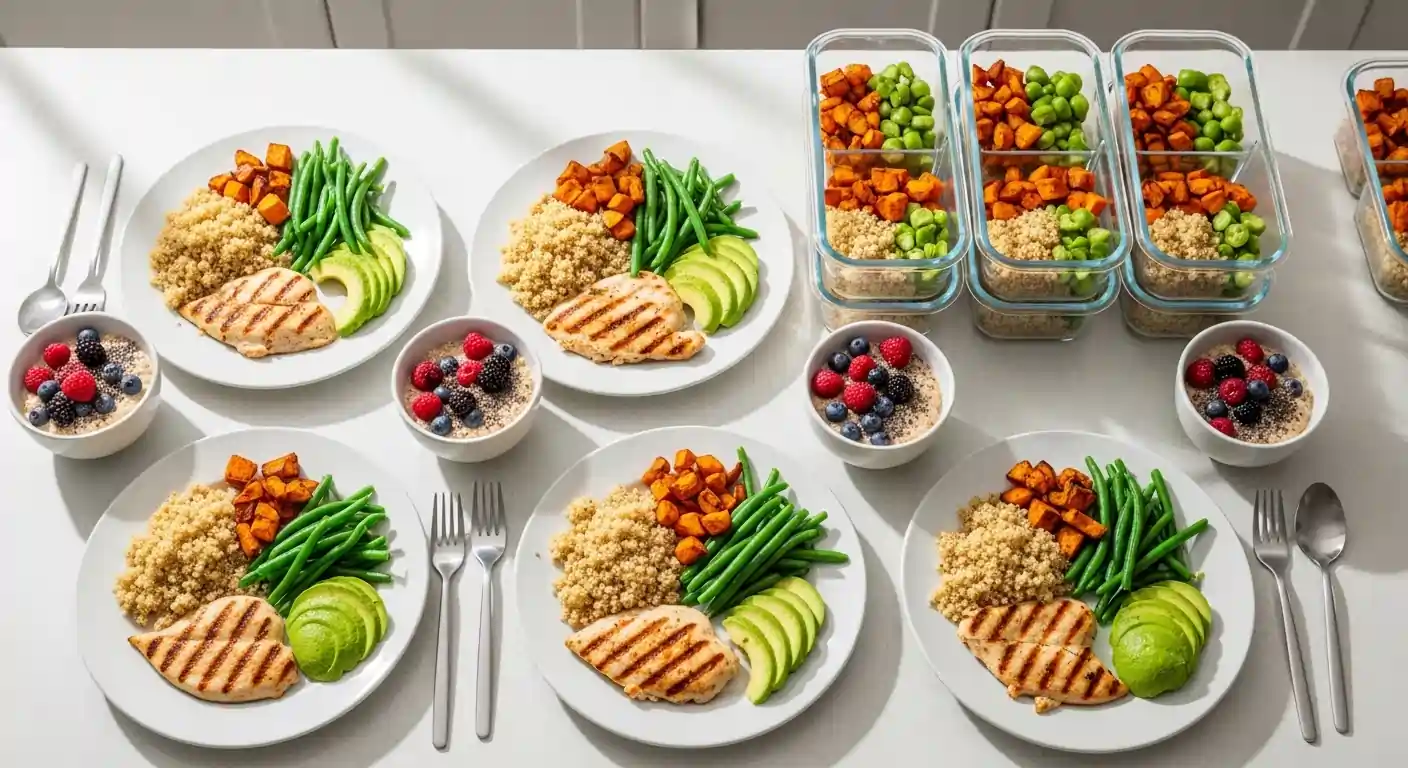
Cook proteins, chop vegetables, and portion snacks once a week. When food is ready in the fridge, eating well takes zero willpower. This one habit doubles your success rate on any weight loss meal plan.
Drink Water Before Every Meal
Drinking 500ml of water 30 minutes before eating reduces calorie intake at that meal by around 13% according to clinical studies. It is one of the simplest additions to the best meal plans for weight loss.
Remove Processed Food From Your Home
You cannot eat what is not there. Clearing your kitchen of ultra-processed snacks, sugary drinks, and refined carbohydrates removes the biggest obstacle most people face. Replace them with meal-prep friendly whole foods.
Add Light Movement Daily
A 20-minute walk after dinner improves insulin sensitivity, speeds digestion, and burns extra calories. The best meal plans for weight loss always work faster when paired with consistent daily movement — even light activity.
Track Your Meals for the First Two Weeks
Tracking what you eat for the first 14 days builds awareness fast. Most people discover they eat 300 to 500 more calories than they think. Use a free app like MyFitnessPal or Cronometer to measure portions honestly.
Mistakes That Ruin Even the Best Meal Plans for Weight Loss
Cutting calories too aggressively slows your metabolism within weeks. A deficit of 300 to 500 calories per day is sustainable. A deficit of 1,000 calories per day is not — it leads to muscle loss, fatigue, and rebound weight gain.
Skipping meals to save calories backfires every time. Hunger builds, willpower drops, and the next meal becomes a binge. Spacing meals evenly throughout the day keeps hunger manageable.
Drinking liquid calories without accounting for them is a hidden trap. One large flavored coffee drink can add 400 calories to your day without making you feel any fuller. Stick to water, black coffee, and unsweetened tea.
Frequently Asked Questions
What are the best meal plans for weight loss for beginners?
Start with the high-protein low-calorie plan. It is the most straightforward structure — three meals and one snack daily, centered around lean protein and vegetables. No complex tracking required in the first week.
How many calories should I eat on a weight loss meal plan?
Most adults lose weight steadily on 1,400 to 1,600 calories per day. The exact number depends on your current weight, activity level, and how aggressive a deficit you choose. A 300 to 500 calorie daily deficit is safe and sustainable.
Can I lose weight without counting calories?
Yes. Following structured meal plans that focus on whole foods, high protein, and fiber naturally keeps calories in check without obsessive tracking. The best meal plans for weight loss are designed so you feel full on fewer calories automatically.
How fast will I see results on a weight loss meal plan?
Most people see noticeable changes within two to three weeks. Visible body composition improvements typically appear after four to six weeks of consistent meal planning combined with regular movement.
Is intermittent fasting one of the best meal plans for weight loss?
Yes. Intermittent fasting consistently produces strong results when combined with nutritious food choices during the eating window. The 16:8 method is the most practical starting point for most people.
Do I need supplements on a weight loss meal plan?
Not usually. Well-structured whole food meal plans provide most nutrients your body needs. A basic multivitamin and vitamin D supplement cover common gaps, especially in winter months.
The Bottom Line
Weight loss does not require suffering through bland food or skipping meals every day. The best meal plans for weight loss are built around real, satisfying food — organized in a way that keeps your body in a calorie deficit without making you miserable.
Pick one plan from this guide that matches your lifestyle. Stick to it for four weeks without switching. Track your progress, adjust portions where needed, and add daily movement to accelerate results.
The people who transform their bodies are not the ones with the most willpower — they are the ones with the best systems. Build yours starting today, and let the best meal plans for weight loss do the heavy lifting for you.