Crab Walk Exercise: 7 Powerful Benefits You Really Must Know
The crab walk exercise is one of the most overlooked moves in fitness and it might be the one your body actually needs right now.
Most people chase complex routines, expensive equipment, and gym memberships. Meanwhile, this one floor-based movement works your triceps, glutes, core, and shoulder stabilizers all at once. No weights. No machine. Just you and a few feet of floor space.
Here is what it does, how to do it right, and why it belongs in your routine starting today.
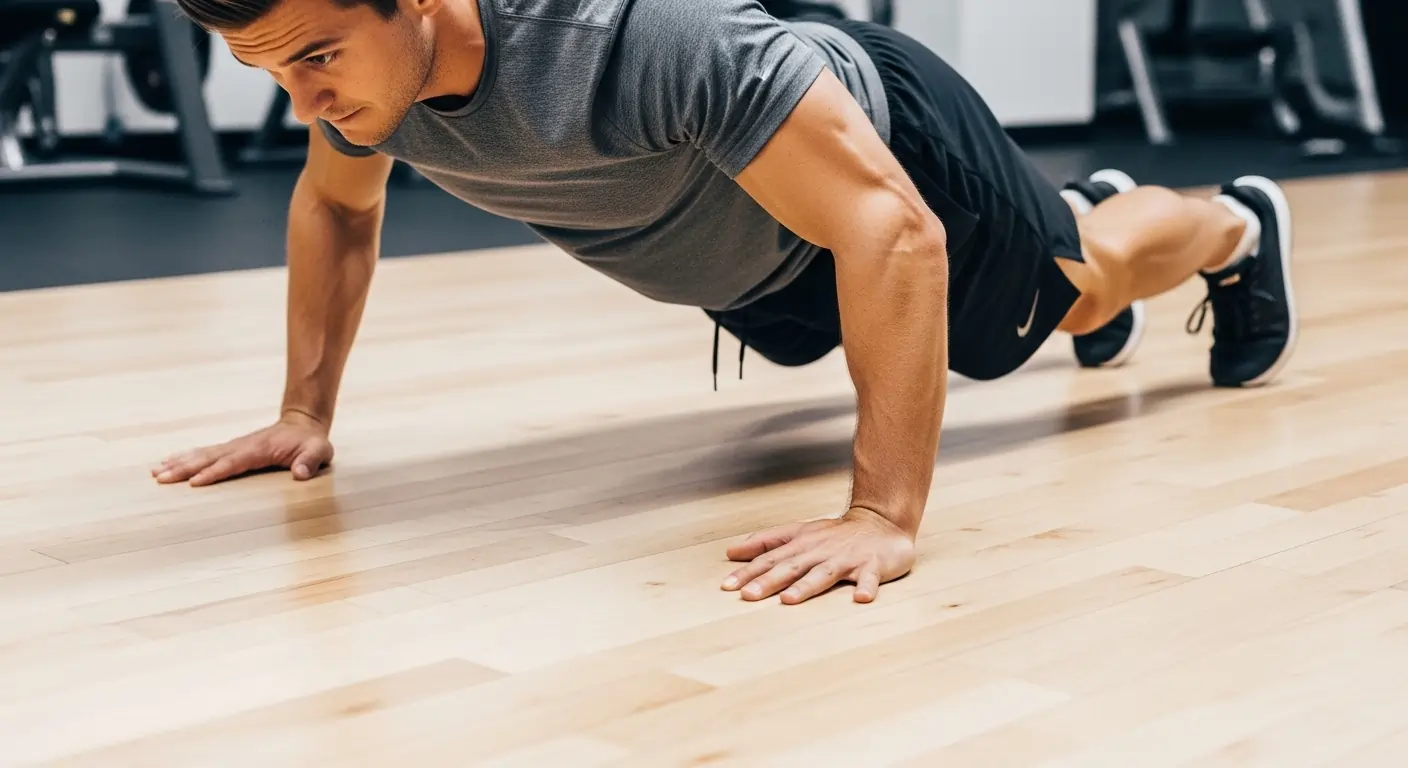
What Is the Crab Walk Exercise and Why Does It Work
The crab walk is a bodyweight ground movement. You sit with knees bent, place your hands behind you with fingers forward, then lift your hips and start moving.
Your chest faces upward — opposite to a bear crawl. You move by stepping one hand and the opposite foot together while keeping your hips elevated. That cross-body pattern forces your nervous system, core, and limbs to coordinate simultaneously.
That coordination is exactly what makes it so effective. Most exercises isolate one muscle group. The crab walk demands everything at once.
If you are new to bodyweight training, our beginner fitness guide covers how to build your base before adding movement-based exercises like this.
Muscles the Crab Walk Targets
This is where most people get surprised. A simple floor movement works more muscle groups than many gym machines.
- Triceps — your arms carry your bodyweight through every step
- Deltoids and rotator cuff — shoulder stabilizers fire constantly
- Glutes — hold your hips elevated for the full movement
- Hamstrings — active during the hip extension phase
- Transverse abdominis and obliques — core stabilizes against rotation
- Hip flexors — control your leg movement and balance
- Wrist and forearm extensors — loaded on every ground contact
That is seven muscle groups in one movement. According to ACE Fitness, compound bodyweight movements that load multiple chains simultaneously produce faster strength gains than isolated exercises — especially for beginners.
7 Powerful Benefits of the Crab Walk Exercise
1. Full-Body Strength With Zero Equipment
You build pushing strength in your arms, extension strength in your hips, and rotational stability in your core — all in one move. For home training, this is as efficient as it gets.
2. Shoulder Health From an Unusual Angle
Most shoulder training uses vertical or horizontal push patterns. The crab walk loads your shoulder with your arm behind your body — a position most routines never touch. This builds joint resilience and reduces long-term injury risk.
3. Glute Activation for People Who Sit All Day
People who sit for long hours develop weak, underactive glutes. Adding the crab walk exercise to your routine forces constant glute contraction and directly counters the hip flexor tightness that desk work creates.
4. Core Stability Under Real Load
Unlike planks or crunches, the crab walk trains dynamic core stability — the kind that helps you in real life. Your core fights gravity from an unusual angle while your limbs move. That transfers directly to running, lifting, and everyday movement.
5. Better Coordination and Athletic Performance
Moving opposite limbs together while keeping the hips stable trains neuromuscular patterns that underlie almost every sport. Coordination built here transfers to swimming, martial arts, court sports, and running. Research from Healthline confirms that multi-planar bodyweight movements improve athletic coordination faster than single-plane machine training.
6. Improved Hip Mobility
The hip extension required to keep your hips elevated throughout the movement stretches your hip flexors and opens the front of your pelvis. Do it regularly and you will notice reduced tightness, better posture, and less lower back tension within two weeks.
7. Low Impact, High Return
No jumping, no heavy loading, no joint compression. The crab walk delivers a serious training stimulus while being kind to your knees, spine, and hips. That makes it ideal for beginners, older adults, and anyone returning from injury.
How to Do the Crab Walk Exercise With Proper Form
Get the technique right from day one and every other benefit follows automatically.
- Sit on the floor with knees bent and feet flat, hip-width apart
- Place your hands behind you with fingers pointing forward or slightly outward
- Press through your hands and feet to lift your hips off the floor
- Your body forms a tabletop — hips roughly level with knees and shoulders
- Step your right hand and left foot forward at the same time
- Follow with your left hand and right foot
- Keep your hips elevated and your core tight throughout every single step
- Move forward, backward, or laterally depending on your session goal
Start with 3 sets of 10 steps each direction. Rest 30 to 45 seconds between sets. Focus on hips staying level — they should not sag or twist as you move.
For a detailed visual breakdown of form variations, VeryWell Fit covers step-by-step progressions for all fitness levels.
4 Mistakes That Ruin Your Results
Hips Dropping to the Floor
The moment your hips sag, your glutes disengage and the movement loses most of its value. If you cannot maintain elevation, shorten your step length until the strength builds.
Fingers Pointing Backward
Rotating your fingers away from your body puts excessive strain on the wrist extensors. Always start with fingers forward. Rotate slightly outward only after your wrist strength improves over a few weeks.
Moving Too Fast
Speed in the crab walk exercise kills control. Slow, deliberate steps keep your target muscles engaged and reduce the chance of losing your balance mid-set. Build control before you build speed.
Forgetting to Breathe
Exhale as you step, inhale as you settle. Consistent breathing activates the deep core and prevents unnecessary tension in your neck and upper traps.
How to Add It to Your Weekly Routine
Three sessions per week is the right starting point. Your core and shoulder stabilizers need 48 hours to recover between sessions.
- Monday — 3 sets of 10 steps per direction after your main workout
- Wednesday — 3 sets of 15 steps, increase pace slightly
- Friday — 4 sets of 20 steps or 30-second timed sets
The crab walk exercise pairs well with lower abdomen work. If you want a complete core routine, our lower abdomen exercises guide shows exactly how to combine both for faster results.
Frequently Asked Questions
Is the crab walk exercise good for beginners?
Yes. It needs no equipment and works at any fitness level. Beginners should start with 10 steps per direction and focus on keeping hips elevated before increasing distance or speed.
What muscles does the crab walk work?
The crab walk targets triceps, deltoids, rotator cuff, glutes, hamstrings, core stabilizers, hip flexors, and wrist extensors — all in one movement.
How many calories does the crab walk exercise burn?
The crab walk exercise burns roughly 8 to 12 calories per minute depending on your body weight and speed. It is a moderate-intensity movement that contributes meaningfully to total daily calorie burn when done consistently.
Can I do the crab walk every day?
Light daily sessions are safe for most people. Heavier volume sessions need a rest day in between to allow shoulder stabilizers and core muscles to recover properly.
Does the crab walk help lower back pain?
It can. Strengthening the glutes and core directly reduces the load on the lumbar spine. Anyone with existing back issues should get medical clearance before starting any new exercise.
How is the crab walk different from the bear crawl?
In the crab walk your chest faces upward and hips are lifted. In the bear crawl your chest faces downward. Both are excellent compound movements but they target different muscle groups and movement patterns.
Can the crab walk replace gym exercises?
For beginners and intermediate trainees, yes — for many movement patterns. It covers tricep pressing, glute extension, core stability, and shoulder work simultaneously. It cannot replace heavy compound lifts like squats or deadlifts but fills in a lot of gaps for home trainers.
The Bottom Line
It looks too simple to matter. That is the trap — and the people who fall for it are the ones who miss out on one of the best full-body movements available without a gym.
Pick up this move three times this week. Watch your shoulder stability improve. Feel your glutes activate properly for the first time. Notice your core holding stronger through everything else you do.
Your body does not need more complex programs. It needs the right movements done consistently — and the crab walk exercise is one of them.