Gym Routine for Women: 7 Proven Workouts for Amazing Results
A gym routine for women that actually fits your body, your goals, and your schedule is rarer than it should be.
Most gym programs were built for men and repackaged with pastel colors. They miss the point entirely. Women have different recovery patterns, different hormonal cycles, and different muscle imbalances that a real training plan must account for.
This guide gives you seven gym workouts that do exactly that — structured, proven, and ready to use starting this week.
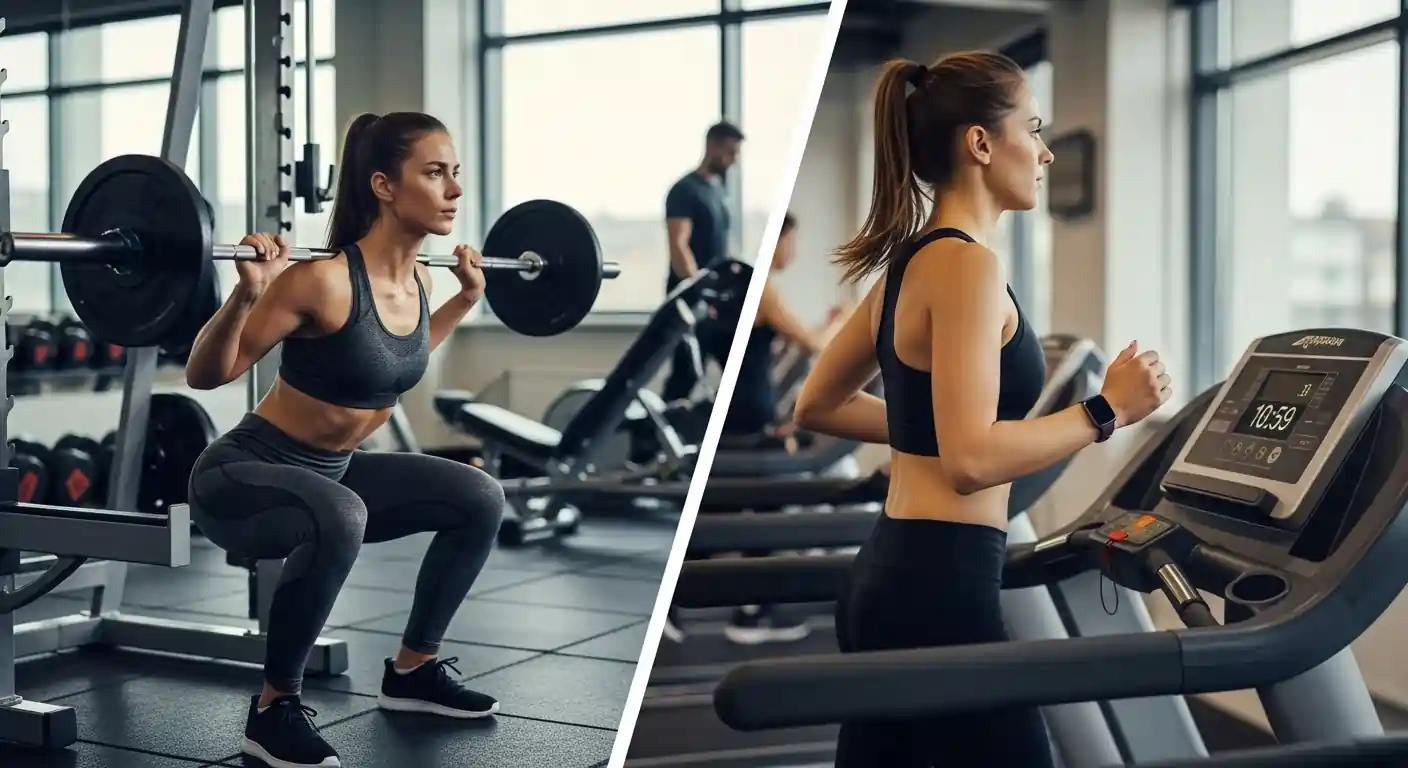
What Makes a Gym Routine for Women Different
The fundamentals of training are universal — progressive overload, compound movements, adequate recovery. But how those fundamentals apply shifts depending on your physiology.
Women generally carry more body fat in the lower body and tend to have stronger posterior chains relative to their anterior chains. That means most women benefit from more glute and hamstring work, more pulling exercises, and more direct core stability training than a standard program offers.
Hormonal fluctuations also matter. Energy levels, strength output, and recovery speed all shift across your monthly cycle. A well-designed gym routine for women accounts for those shifts rather than treating every week the same.
Train smarter than the generic program on the wall. Your results will show the difference.
The 7 Best Gym Workouts in a Complete Gym Routine for Women
Day 1: Lower Body Strength — Glutes and Hamstrings
This session targets the muscles most women under-develop. Barbell hip thrusts, Romanian deadlifts, sumo squats, lying leg curls, and cable kickbacks make up the core of this workout.
Rest 60 to 90 seconds between sets. Aim for 4 sets of 10 to 12 reps on the main lifts. Focus on the mind-muscle connection in your glutes — squeeze hard at the top of every rep. This one session per week builds more shape and strength in the lower body than three sessions of machine leg presses.
Day 2: Upper Body Push and Pull
Women typically have strong lower bodies but underdeveloped upper backs and shoulders. This session fixes that imbalance. Dumbbell shoulder press, seated cable rows, lat pulldowns, incline dumbbell press, face pulls, and tricep pushdowns cover every major upper body pattern.
Use a weight that challenges you by rep 10 of every set. If you can complete 12 reps easily, increase the weight next session. Upper body strength development in women often stalls because the weights used are too light. Push past comfortable.
Day 3: Full Body Power Circuit
This session combines strength and cardiovascular conditioning in one. Goblet squats, dumbbell deadlifts, push-ups, dumbbell rows, box step-ups, and plank holds are performed in a circuit format with minimal rest between exercises.
Complete 3 rounds of the full circuit with 90 seconds rest between rounds. This session builds muscular endurance, elevates heart rate, and burns significantly more calories than a standard strength session. It works every major muscle group in under 40 minutes.
Day 4: Lower Body Quad-Focused
While Day 1 targets the posterior chain, Day 4 targets the quads and inner thighs. Barbell back squats, leg press, Bulgarian split squats, walking lunges, and leg extensions develop balanced lower body strength and reduce knee injury risk.
Knee tracking matters on every rep. Keep your knee aligned over your second toe during squats and lunges. Poor knee mechanics is the most common cause of gym injuries in women.
Day 5: Core and Stability
Core training goes far beyond crunches. This session includes dead bugs, pallof presses, cable woodchops, hanging knee raises, side planks, and bird dogs. These movements train rotational stability, anti-extension, and lateral core strength — the three functions your core actually performs in real life.
Fifteen to twenty minutes of focused core work produces more functional strength than 100 daily sit-ups. Add this session at the end of a cardio day or as a standalone 30-minute gym visit.
Day 6: Cardio and Conditioning
This session keeps your cardiovascular system strong without eroding the muscle you built during the week. Thirty minutes on the stairmaster, incline treadmill walk, rowing machine, or stationary bike at moderate intensity covers your aerobic base.
Alternatively, use this day for a 20-minute HIIT session — 30 seconds all-out effort followed by 15 seconds rest, repeated 10 times. HIIT burns more total fat in less time. Choose based on your energy levels that week.
Day 7: Active Recovery
Rest does not mean sedentary. A 20 to 30-minute walk, a yoga class, or light foam rolling keeps blood moving and clears metabolic waste from the week’s training. Active recovery sessions reduce next-session soreness and maintain the daily movement habit without adding training stress to your body.
7-Day Gym Routine for Women — Weekly Schedule
- Monday — Day 1: Lower body glutes and hamstrings (50 minutes)
- Tuesday — Day 2: Upper body push and pull (45 minutes)
- Wednesday — Day 6: Cardio and conditioning (30 minutes)
- Thursday — Day 3: Full body power circuit (40 minutes)
- Friday — Day 4: Lower body quad-focused (50 minutes)
- Saturday — Day 5: Core and stability (25 minutes)
- Sunday — Day 7: Active recovery (20 to 30 minutes)
This structure places your two most demanding lower body sessions on Monday and Friday with three days between them. Upper body work sits between those sessions so every muscle group gets adequate recovery before its next heavy session.
Key Tips to Get the Most From Your Gym Sessions
Track Your Lifts Every Session
Progressive overload is the engine behind every result. Write down every weight lifted, every rep completed, and every set performed. Aim to beat at least one number from last session. Small consistent improvements compound into significant results over 12 weeks.
Warm Up Properly
Five minutes of dynamic movement before every session reduces injury risk and improves performance. Leg swings, arm circles, bodyweight squats, hip circles, and band pull-aparts prepare the specific muscles you are about to train. Skip the static stretching before lifting — save that for after.
Eat Enough to Train Hard
Under-eating kills gym performance faster than anything else. Your muscles need carbohydrates for fuel and protein for repair. A pre-workout meal with complex carbs and protein consumed 60 to 90 minutes before training gives you the energy to push your sessions properly.
Sleep 7 to 9 Hours
Growth hormone peaks during deep sleep. Without adequate sleep, muscle protein synthesis drops, cortisol rises, and fat loss slows significantly. Seven to nine hours of sleep is not optional — it is an active part of your training program.
Frequently Asked Questions
How many days a week should a gym routine for women include?
A gym routine for women should include four to five training days per week. This provides enough frequency to drive adaptation while leaving adequate recovery time between sessions. Beginners start with three days and build to five over six weeks.
Will lifting weights make women bulky?
No. Women do not produce enough testosterone to build large muscle mass from standard gym training. Strength training produces a leaner, more defined physique. The women with very large muscles you see in media train specifically for that outcome over many years and often use supplementation.
What is the best gym routine for women beginners?
The best beginner gym routine for women uses three full-body sessions per week. Each session covers a squat pattern, a hinge pattern, a push, and a pull. This builds balanced strength across the whole body before splitting into specialised muscle group training.
How long should each gym session be for women?
Forty to fifty-five minutes is the optimal session length for most women. Sessions shorter than 30 minutes often lack enough volume. Sessions longer than 75 minutes increase cortisol levels and reduce recovery quality. Quality over duration wins every time.
Should women do cardio on the same day as weights?
Yes, this is fine. Perform strength training first, then cardio after. Doing cardio first depletes glycogen stores and reduces strength output. Twenty to thirty minutes of moderate cardio after a weights session does not significantly impact muscle growth.
How long before seeing results from a gym routine?
Most women notice improved strength and energy within two to three weeks. Visible body composition changes — reduced fat, increased muscle definition — typically appear after six to eight weeks of consistent training combined with adequate protein intake.
Is it safe to train during your period?
Yes. Light to moderate training during menstruation is safe and can reduce cramping by releasing endorphins. Reduce intensity during the first one to two days if energy is low. Listen to your body and adjust rather than pushing through pain.
The Bottom Line
The gym rewards consistency above everything else. You do not need to be perfect every session — you need to show up, push a little harder than last time, and recover properly between sessions.
Pick this schedule, commit to it for eight weeks, and track every session. Most women who do this see body composition changes they have been chasing for years through less structured approaches.
The right gym routine for women is not the most extreme one or the most complex — it is the one built around your actual body, your recovery needs, and your goals, done consistently until the results speak for themselves.