Top 10 Women Lawyers in the World Who Made History
The top 10 women lawyers in the world did not just practice law. They rewrote it, challenged it, and used it as a weapon against the very systems that tried to exclude them.
Some argued before the highest courts on earth. Some drafted constitutions. Some spent decades fighting for people who had no other voice. Every name on this list left the legal profession permanently different from how she found it. Read on and you will understand exactly why each one belongs here.
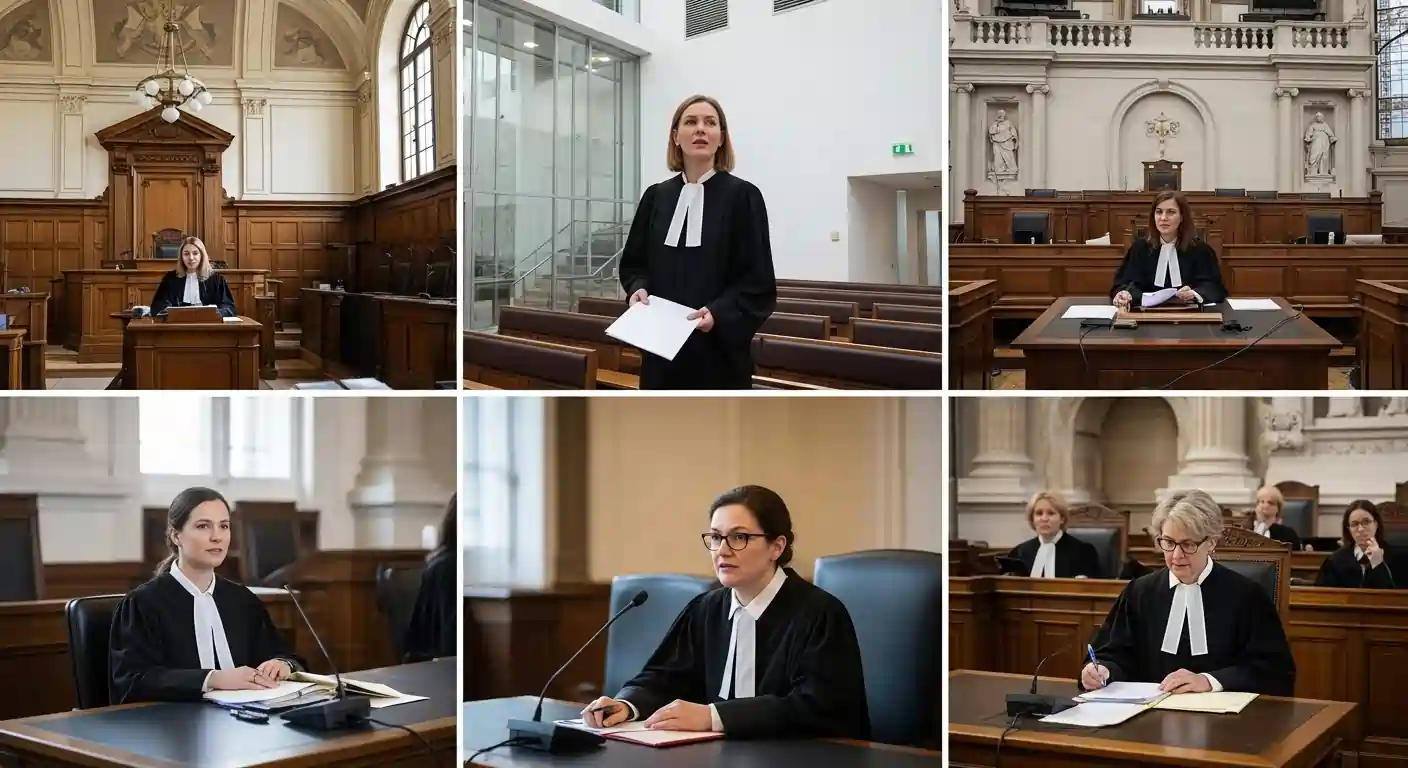
What Makes a Woman Lawyer Truly the Greatest?
Legal greatness is not measured by billable hours or case wins alone. The women on this list are measured by the size of the change they forced. Constitutional impact, human rights advancement, landmark rulings, and the barriers they removed for every female lawyer who came after them.
Some of these women practiced law under conditions where their own right to do so was contested. That context makes what they achieved even harder to fully understand. They built credibility in rooms that did not want to give it to them, and they built it anyway.Below is top 10 women lawyers in the world.
The 10 Greatest Women Lawyers in the World
1. Ruth Bader Ginsburg — The Architect of Gender Equality Law
Ruth Bader Ginsburg spent years arguing gender discrimination cases before the United States Supreme Court before she ever sat on it. As a litigator she built the legal framework that made sex discrimination a constitutional violation under the equal protection clause. She won five of the six cases she argued before the Court.
She joined the Supreme Court in 1993 and served until her death in 2020. Her written opinions and her dissents shaped American constitutional law on gender, voting rights, and civil liberties across nearly three decades on the bench. She became a cultural phenomenon in her final years, but the legal substance behind that public image is what earns her this spot.
2. Amal Clooney — International Human Rights Litigation at the Highest Level
Amal Clooney is a barrister specializing in international law, human rights, and criminal law. She has represented heads of state, genocide survivors, and journalists imprisoned for their work. She argued before the International Court of Justice and the European Court of Human Rights. She has taken cases that most lawyers would not touch because the political risk was too high.
Her case representing the former Prime Minister of Ukraine, defending journalists imprisoned in Egypt, and her work on genocide accountability for the Yazidi people are among the most significant international legal matters of the past decade. The celebrity attention around her name distracts from a legal record that is genuinely exceptional.She also include in top 10 women lawyers in the world.She is also in top 10 women lawyers in the world.
3. Constance Baker Motley — The First Black Woman Federal Judge in America
Constance Baker Motley argued ten cases before the United States Supreme Court and won nine of them. She worked alongside Thurgood Marshall at the NAACP Legal Defense Fund and was the lead counsel in many of the most important civil rights cases of the twentieth century, including the admission of James Meredith to the University of Mississippi.
She later became the first Black woman appointed to the federal judiciary when President Lyndon B. Johnson appointed her to the Southern District of New York in 1966. Her legal career bridged the courtroom and the bench at the highest levels, and her impact on civil rights law is permanent.
4. Shirin Ebadi — Nobel Peace Prize Laureate and Human Rights Lawyer
Shirin Ebadi was the first Iranian woman to serve as a judge, appointed in 1975. When the Islamic Revolution came to power in 1979, she was removed from her position because women were deemed unqualified to serve as judges under the new legal order. She returned to law as a lawyer and spent the next decades defending political dissidents, journalists, and children’s rights inside Iran.
She won the Nobel Peace Prize in 2003 for her efforts for democracy and human rights, becoming the first Iranian and the first Muslim woman to receive the award. She has lived in exile since 2009 but continues to advocate internationally for the rights of Iranians, particularly women and minorities.
5. Sandra Day O’Connor — The First Woman on the United States Supreme Court
Sandra Day O’Connor was appointed to the United States Supreme Court by President Ronald Reagan in 1981, becoming the first woman to serve on that court in its nearly two-century history. Her appointment changed the symbolic and practical reality of what the highest court in the world’s most powerful democracy could look like.
She served until 2006 and became the decisive swing vote on some of the most contested constitutional questions of her era, including abortion rights, affirmative action, and election law. She approached each case from a practical standpoint rather than a rigid ideological one, which made her one of the most influential individual voices in American constitutional history.She is also in top 10 women lawyers in the world.
6. Fatou Bensouda — Chief Prosecutor of the International Criminal Court
Fatou Bensouda served as the Chief Prosecutor of the International Criminal Court from 2012 to 2021, leading investigations into war crimes, crimes against humanity, and genocide across multiple countries. She was the first African woman and first Gambian to hold that position.
Under her leadership the ICC pursued cases involving alleged crimes in the Democratic Republic of Congo, Uganda, Sudan, Libya, and the Central African Republic. She brought formal investigations to situations that many governments preferred to ignore, including a preliminary examination into alleged crimes by members of the United States military in Afghanistan.
7. Belva Lockwood — The First Woman to Argue Before the US Supreme Court
Belva Lockwood was the first woman to be admitted to the bar of the United States Supreme Court and the first to argue a case before it. That happened in 1879. She had to petition Congress directly to get the law changed to allow women access to federal courts because no existing provision permitted it.
She also ran for President of the United States twice, in 1884 and 1888, on a platform of equal rights and international peace. She fought her entire career against a legal establishment that questioned whether women had any place in law at all. Every female lawyer in America today practices in a space she helped force open.She is also in top 10 women lawyers in the world.
8. Sonia Sotomayor — First Latina Justice on the US Supreme Court
Sonia Sotomayor grew up in a housing project in the Bronx and worked her way to Princeton University and then Yale Law School. She was appointed to the United States Supreme Court by President Barack Obama in 2009, becoming the first Latina and the third woman to serve on that court.
Her judicial philosophy emphasizes the importance of lived experience in legal reasoning. She has written significant opinions and dissents on criminal procedure, immigration law, and civil rights. Her personal story and her judicial record together represent one of the most compelling trajectories in the history of the American legal profession.
9. Helena Kennedy — The Conscience of the British Legal System
Helena Kennedy is a barrister and life peer who has spent decades defending individuals accused in some of Britain’s most high-profile criminal cases. She chaired the Human Genetics Commission, led the Power Inquiry into British democracy, and has been one of the most consistent voices in the House of Lords on civil liberties and human rights.
Her work on the legal system’s treatment of women, particularly in cases involving domestic violence and sexual assault, produced real legislative change in the United Kingdom. Her book Eve Was Framed remains one of the most cited texts on gender and the criminal justice system. She is the closest thing the British legal world has to a public legal conscience.
10. Brigitte Mohnhaupt… no — Cornelia Sorabji — First Woman to Study Law at Oxford
Cornelia Sorabji was the first woman to study law at Oxford University in 1889 and the first woman to practise law in both India and Britain. She was born in India under British colonial rule and fought on two fronts simultaneously: against the exclusion of women from the legal profession and for the legal rights of women in purdah who had no access to male lawyers under the customs of the time.She is also in top 10 women lawyers in the world.
She served as a legal advisor to the Court of Wards in India for years, representing women and children whose property rights were at risk. She was called to the Bar in 1923, decades after she had already been doing legal work. Her career is a study in what legal persistence looks like when the institution itself is the obstacle.
What These Women Changed in the Legal Profession
Before Ruth Bader Ginsburg argued her first gender discrimination case, there was no established constitutional framework preventing sex-based discrimination in America. Before Cornelia Sorabji walked into Oxford, no woman had sat in those law lectures. Before Sandra Day O’Connor took her seat, no woman had ever joined the highest court in the United States.
These are not incremental improvements. They are structural changes that altered what the legal profession looks like and who it belongs to. Every woman who passes the bar today, argues before an appellate court, or sits on a federal bench does so in a world these women helped build.
top 10 women lawyers in the world
- Women now make up over 50 percent of law school graduates in the United States
- Female judges sit on the highest courts of every G7 nation
- International legal bodies including the ICC and ICJ have had female chief prosecutors and presidents
- Human rights law as a distinct practice area was shaped significantly by female lawyers on this list
Barriers Women Lawyers Still Face Today
Progress is real but incomplete. Women lawyers reach partnership at lower rates than male colleagues in most major firms across North America, Europe, and Asia. Female judges remain underrepresented on constitutional and appellate courts in many countries, and the gap widens significantly at the highest judicial level. Women in law in developing nations often face institutional and cultural barriers that go far beyond what any qualification can overcome. In parts of the Middle East, South Asia, and sub-Saharan Africa, female lawyers operate under legal and social constraints that make the careers of women on this list look like the exception rather than a signal of what the norm should be. That gap is real and it matters.
The women on this list removed specific barriers through specific acts of legal courage that required years of sustained effort. Each win came at personal cost. Shirin Ebadi lost her judgeship and eventually her country. Belva Lockwood had to petition Congress just to be heard. Constance Baker Motley argued cases in Southern courtrooms where the hostility was not subtle. The removal of those barriers did not automatically clear the path behind them, and the cultural resistance they faced did not disappear when the law changed. That work continues, and it continues on the foundation these ten women built through cases, opinions, and careers that refused to accept the limits placed on them. These are all top 10 women lawyers in the world.
Why the Top 10 Women Lawyers in the World Still Matter
Every name on this list represents a turning point. Not just in law, but in how societies understand who gets to hold legal power, interpret legal texts, and determine what justice looks like in practice. That question is not settled. It is still being argued in courtrooms and legislatures around the world.
The relevance of these women is not historical. Their precedents are cited in current cases. Their appointments opened doors that younger lawyers now walk through. Their written opinions shape how judges reason about constitutional questions today. They are not just history. They are the active foundation of current legal practice.These are all top 10 women lawyers in the world.
Frequently Asked Questions
Who is the most famous woman lawyer in the world?
Ruth Bader Ginsburg is the most globally recognized woman lawyer. Amal Clooney holds that status among currently practicing international human rights lawyers.
Who was the first woman lawyer in history?
Arabella Mansfield became the first licensed female lawyer in the United States in 1869. Cornelia Sorabji was the first woman to study law at Oxford and practice in India and Britain.
Has a woman ever led the International Criminal Court?
Yes. Fatou Bensouda of Gambia served as Chief Prosecutor of the ICC from 2012 to 2021, the first African woman to hold that role.
Who was the first woman on the US Supreme Court?
Sandra Day O’Connor, appointed by President Ronald Reagan in 1981. She served until her retirement in 2006.
Which woman lawyer won the Nobel Peace Prize?
Shirin Ebadi of Iran won the Nobel Peace Prize in 2003 for her human rights and democracy work, the first Iranian and first Muslim woman to receive the award.
Are there female Chief Justices in the world?
Yes. Several countries have had female Chief Justices including Canada, Australia, New Zealand, and multiple nations across Africa and Asia.
What percentage of lawyers are women today?
In the United States women make up over 50 percent of law school graduates. Globally the figure varies widely by country, with some nations still having very few female lawyers.
Who is the best human rights lawyer in the world right now?
Amal Clooney is the most internationally prominent. Her case record across the ICC, ICJ, and European Court of Human Rights puts her at the top of that field currently.
Final Thoughts
The top 10 women lawyers in the world on this list changed what law is, who it protects, and who gets to practice it. They argued cases that no one else would take. They sat in seats that no woman had sat in before. They wrote opinions that courts still follow decades later.
Their legacy is not confined to the past. It lives in every courtroom where a female judge presides, every law school where women outnumber men, and every human rights case argued by a woman who learned that it was possible because someone before her proved it was.