Top Female Journalists of All Time Who Actually Changed the World
Some women didn’t just report the news. They walked into war zones, challenged presidents, and published stories that brought down governments. These are the top female journalists whose names deserve to be remembered, not just in media classes, but by anyone who values truth.
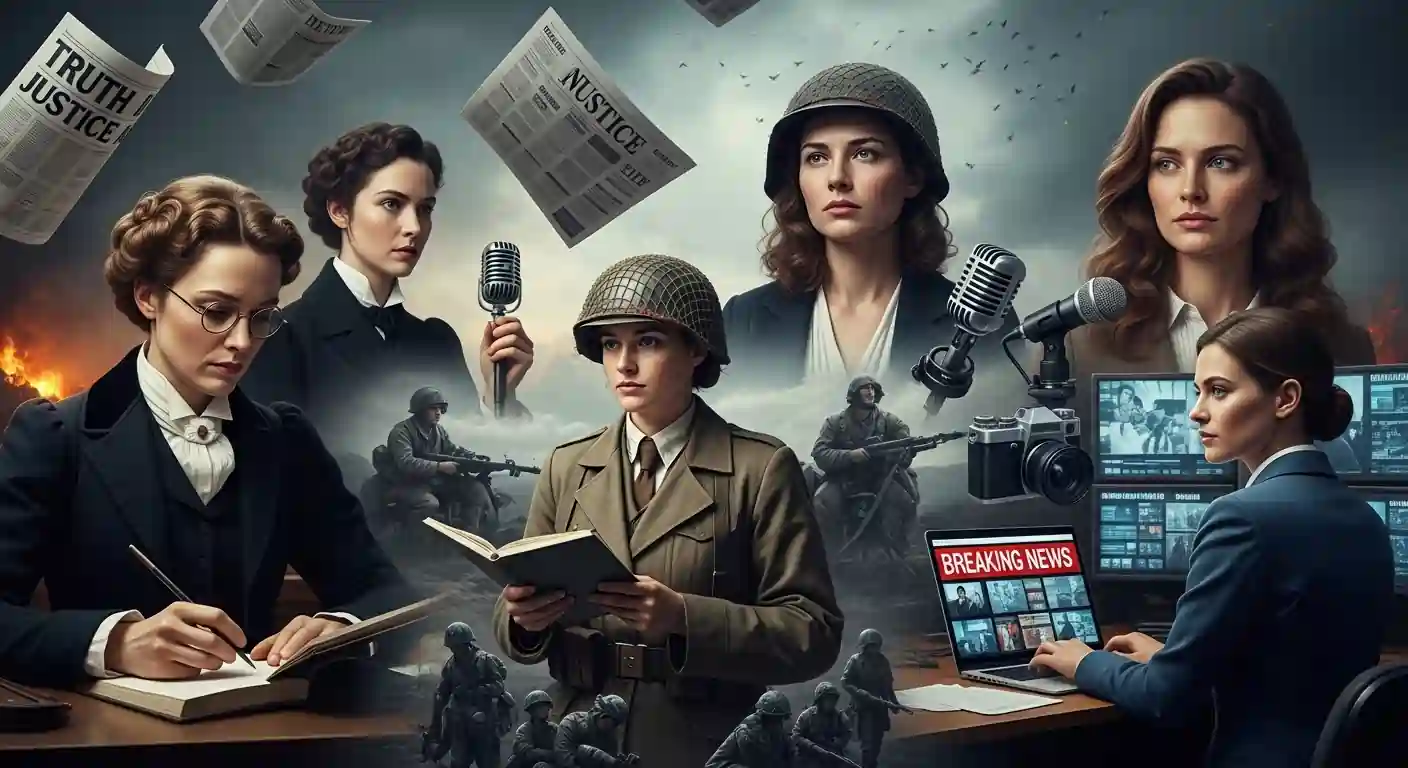
Why Top Female Journalists Deserve More Recognition
Here’s the thing. Women have always been in journalism. But for most of history, they were pushed to the side, handed soft beats, and kept away from the real stories. That changed because a few women refused to accept it.
Women now make up 46% of journalists in the field, edging closer to gender balance, but that number took generations of groundbreaking women to reach. The names below are the reason that shift happened.
The Top Female Journalists Who Made History
Nellie Bly
In 1887, Nellie Bly was admitted to Blackwell’s Island, New York City’s asylum for the insane. Every paper covered the mysterious girl who was “undoubtedly insane” except The New York World, which sent her there on purpose. She faked mental illness to expose the brutal treatment of patients inside. That story didn’t just sell papers. It forced real reform.
Bly also went around the world in 72 days to beat a fictional record. She didn’t just cover stories. She became them.
Martha Gellhorn
Gellhorn covered nearly every major armed conflict of the twentieth century, from the Spanish Civil War through the U.S. invasion of Panama in 1989, filing dispatches that put civilians rather than commanders at the center of war reporting.
She was the only woman to land at Normandy on D-Day, having stowed away on a hospital ship. The military didn’t credential her. She went anyway.
Dorothy Thompson
Dorothy Thompson was one of the few journalists to interview Adolf Hitler before World War II and was a vocal critic of his regime from early on. In 1939, Time magazine recognized her as the second most influential woman in America, after Eleanor Roosevelt. She had a nationally syndicated column that reached millions and used every word of it to push back against fascism when most people still didn’t take the threat seriously.
Katharine Graham
Katharine Graham played a critical role as publisher of The Washington Post during its coverage of the Watergate scandal, which ultimately led to President Richard Nixon’s resignation. She could have killed the story. She ran it. She later won a Pulitzer Prize for her memoir and received the Presidential Medal of Freedom posthumously.
Barbara Walters
Barbara Walters became the first female co-host of NBC’s Today Show in 1974 and went on to conduct some of the most watched interviews in television history with everyone from celebrities to world leaders. Her style was personal, probing, and impossible to dodge. It set the tone for television journalism for decades.
Oriana Fallaci
Oriana Fallaci was an Italian journalist known for her bold and confrontational style. She conducted interviews with some of the most powerful figures of the 20th century, including Henry Kissinger and Ayatollah Khomeini. Kissinger later said his interview with Fallaci was the most damaging of his career.
Anna Politkovskaya
Anna Politkovskaya was a Russian journalist and human rights activist known for her courageous reporting on the Chechen conflict and her outspoken criticism of the Russian government. She was assassinated in 2006. The people who wanted her silenced knew exactly how powerful her reporting was.
Maria Ressa
Maria Ressa is the first Filipino woman to win the Nobel Peace Prize. As the co-founder of Rappler, she has spent decades exposing corruption, misinformation, and threats to democracy, often at great personal risk. She once said that without facts you cannot have truth, and without truth you cannot have trust. In a media world drowning in noise, that matters more than ever.
Katie Couric
Katie Couric made history as the first woman to anchor a major network evening news program solo when she took over CBS Evening News in 2006. Before that, she spent 15 years on the Today show earning trust from millions of morning viewers. Her career helped prove that women could lead, not just support, in broadcast news.
What Made These Women Different
Honestly, it wasn’t just talent. Most newsrooms had talented women they ignored. What set these top female journalists apart was the refusal to wait for permission. They went to places no one sent them. They asked questions no one else dared to ask. They published stories that powerful people desperately wanted buried. That’s not a formula. That’s character.
The Lasting Impact of Women in Journalism Today
Women now hold 24% of top editor positions in major newsrooms across 12 markets, a number that’s still too low but it’s moving. Every woman who broke a barrier made it slightly easier for the next one. The top female journalists on this list didn’t just do great work. They made the industry structurally different by being in it.
FAQs About Top Female Journalists
Who is considered the greatest female journalist of all time?
Most media historians point to Martha Gellhorn or Nellie Bly. Gellhorn covered over six decades of conflict reporting and invented the civilian-focused war journalism model still used today. Bly used undercover investigative methods that changed how reporters think about getting the story.
What did top female journalists fight for beyond their bylines?
They fought for the right to cover real news including war, politics, crime, and corruption. For most of journalism’s history, women were pushed toward society pages and lifestyle stories. These journalists refused those limits and changed what women in newsrooms were allowed to do.
How did female journalists change investigative reporting?
Women like Nellie Bly brought immersive first-person investigative techniques into mainstream journalism. Katharine Graham showed that female media leaders could take on the most powerful political figures in the world. Their methods directly shaped modern investigative journalism standards.
Why do so few people know the names of top female journalists from history?
The biggest mistake people make is assuming the history of journalism is well documented for everyone equally. It isn’t. Women’s contributions were routinely under-credited and left out of the story. That’s slowly changing as researchers and educators push to correct the record.
Who are the top female journalists working today?
Maria Ressa, Rachel Maddow, and Katie Couric are among the most recognized. But there are hundreds of women doing powerful work in conflict reporting, investigative journalism, and digital media right now. The top female journalists of the next generation are already in newsrooms and building audiences online.
When you look at everything, the top female journalists of all time didn’t just tell stories. They built the credibility, tools, and standards that modern journalism still runs on. Their names belong in every conversation about what great reporting actually looks like.